Monday, March 6, 2023

What is DBT Skills Training and How Can It Help You Overcome Anxiety, Depression and other Mental Health Struggles?


Dialectical Behavior Therapy (DBT) is a type of evidence-based treatment that is rapidly growing in popularity in the mental health realm. As a cousin to the even more widely known cognitive behavioral therapy (CBT), DBT is a type of talk therapy that focuses on skills training for clients looking to overcome anxiety, depression and other mental health struggles.
DBT skills training
The format of DBT skills training is based on four modules that teach clear, actionable skills in mindfulnessinterpersonal effectivenessemotion regulation, and distress tolerance. These modules are based on dialectics, or the push-pull of two seemingly opposite constructs such as acceptance and change.

The Power DBT Skills Training

You may already be fully aware of the healing power inherent in this treatment model, and if so, feel free to skip ahead to the good part. Still, learning and applying these DBT skills to your experience can seem difficult and intimidating to do alone. For some people, it is most beneficial to learn these skills with the guidance of a qualified professional, especially if you’re dealing with clinically significant anxiety, depression, suicidal ideation or any other mental health struggles. If you are interested in learning more about Dialectical Behavior Therapy and how it could benefit you, reach out to speak with a provider today.
This article is the first of a series on Dialectical Behavior Therapy and is intended to give an introduction to DBT and the skills training that makes this model so effective for so many. Check back for future installments of the DBT series to learn more and dive deeper into the skills and resources DBT has to offer.

The History Of Dialectical Behavior Therapy

Dialectical Behavior Therapy was developed by psychologist Marsha Linehan in 1992. Linehan was inspired by her own mental health struggles with suicidal ideation and attempt, borderline personality disorder and schizophrenia to treat people with similar conditions. Utilizing her own experience, Linehan found that many people with mental health struggles often deal with seemingly opposing thoughts and concepts, which she refers to as “black and white” thinking. In fact, as we mentioned above, the word “dialectical” is defined as the interaction of conflicting ideas, such as the black and white thinking Linehan described. In her work, Linehan focused on being able to effectively teach clients to live in the “grey” of life and accept that two or more contradicting ideas can be true.
DBT was originally developed with the intention of treatment for borderline personality disorder. However, as DBT was studied and researched as an evidence-based intervention for other diagnoses, it has been found that DBT is effective in treatment of suicidal behaviors, eating disorders, anxiety, depression and substance use to name a few. Rooted in Zen philosophies, Dialectical Behavior Therapy also strives to help clients develop a more accurate intrinsic view of their emotions, internal cues and reactions. Linehan crafted DBT to be an effective communication of Cognitive Behavior Therapy, humanism and Zen principles. This form of therapy was the first to formally incorporate mindfulness into intervention.

The Modules Broken Down

As mentioned before, DBT is rooted in skill education to address life areas that are defined as lacking or compromised in the DSM definition of symptomology of a specific mental health diagnosis. To best understand the purpose and structure of DBT, we will provide a brief overview of the four modules covered.

Mindfulness

Many mindfulness skills used in DBT programming are adopted from Eastern meditation practices. The skills are meant to aid the client in introspective thinking, awareness and being present in the moment. Practicing these skills is helpful in emotional regulation, impulsiveness and emotionally-charged reactions.

Interpersonal Effectiveness

Interpersonal effectiveness essentially refers to positive social skills and, once again, not letting emotions dictate and control our social interactions. The skills are beneficial for conflict resolution and developing and maintaining meaningful, positive relationships.

Emotion Regulation

The skills taught in the emotional regulation module of DBT are meant to enhance control over a person’s intense emotions, as well as their ability to self-soothe, regulate their internal state and act in a thoughtful way. This includes labeling emotions, how emotions effect behavior, how to decrease negative emotions and increase positive emotions.

Distress Tolerance​

Distress tolerance is the final module of DBT. This module aims to teach patients that negative emotions, distress and pain are an inevitable part of life. By accepting and acknowledging this, we can learn skills and tools for helping us accept what we cannot change and manage our emotions during difficult times. This includes skills such as self-soothing and de-escalation.

DBT & Me

DBT skills training can be very helpful in learning to identify your emotions, internal cues and monitor your reactions. With practice, and perhaps some guidance, you can learn more about yourself and your emotions and begin to utilize these tools naturally on a daily basis. If you feel you need support learning and applying these skills to your individual journey with anxiety, depression or another mental health struggle, there are professionals who can help.


Seeking therapy following a mental health diagnosis can be difficult and intimidating. It can be helpful to look into different modalities and types of therapy to help familiarize yourself with the process to feel more comfortable.

This series of articles will also provide in depth information that could help you decide if DBT is a good fit for you and how to pursue it. DBT skills are great evidence-based resources to help understand and process emotions and regulate distress and communicate your feelings in effective ways. If you think DBT may be a good fit for you, reach out and contact Thira Health to get more information and set up a consultation.


Source: https://www.thirahealth.com/2022/10/05/what-is-dbt-skills-training-and-how-can-it-help-you-overcome-anxiety-depression-and-other-mental-health-struggles/

Sunday, March 5, 2023

The Pumpkin Spice Effect: Everything Nice about Fall and Food


When you’re rewriting your relationship with food, figuring out how it fits into your fall traditions can be just as complex as creating new habits around caring for your body. For this reason, it’s important that you allow joy and connection to take the place of painful rituals that no longer serve you.This fall, you can do that in many ways. Today we’re sharing our favorite fall festivities that will put a distinctly autumnal softness on the sharp edges of your food-based feelings. We’ll start by inviting curiosity to explore what that might look like in your life this fall.

Food Can Be So Much More Than Eating

Pumpkin Spice Lattes did not become synonymous with fall because they’re a rarity. These aromatic drinks created a cultural moment that people felt connected with. Autumn is full of moments like this—cute coats and scarves, bonfires, festivals, and more.There are so many opportunities to lean into the season but what does that look like when it comes to mealtime?

Community And Connection During Meals

With socializing returning indoors and more movie nights in your future, this is an opportunity to make a cultural moment out of meals in your life.What could happen if you leaned into a cultural moment of community where control was once held tight in your life? Now is the perfect time to invite a cool shift of reflection and connection, especially if you’re considering revisiting your relationship with food during eating disorder recovery.In these moments, there is not a single ounce of focus on what you’re eating or even how the food decisions happened. Food is the activity but it is not the conversation. Instead, you are offered the power of parallel space—a chance to connect over an activity that allows you to strengthen your bonds and sense of belonging.

There Are Mental Health Benefits Of Social Eating

Two important practices—eating socially and making food an invitation to curiosity instead of a central theme of your life—have power over your mental health in some powerful ways. After feeling fraught with anxiety and avoidance, you may fear that food will only bring up these negative mental health impacts. Fear not, as we’ve got some excellent news for you: there are so many ways to restructure your social eating so that you feel supported during these experiences.From researching seasonal recipes to sitting once more around a communal table, you can invite the opportunity for shared gratitude and an increased sense of connection. You may find—like this neurobiological research did—that your emotional intelligence increases through the simple act of opening up the possibility of sharing a meal as an activity with loved ones.Sharing food has also been evidenced to benefit us from a very young age in a variety of ways. There’s even a global conversation about the power of shared meals to build community.

Learn And Grow With Fall Festivities

Consider taking in your local attractions like the zoo or botanical garden to experience plants and nature in a new way. While you’re in these spaces flourishing with life, seek out information on the plants and growth that happens seasonally. Can you use any of them in cooking, seasoning, or for decoration around the house? From picking your own (think pumpkin patch and apple orchards) to treating yourself to a new perspective, you’ll surely spend a day making memories with your loved ones!If you’re looking to start your own garden, check your local community spaces for tips on successful local gardening. Here in Bellevue, our government has created an accessible guide to help you get started.

Fun Autumnal Recipes To Create Together Using Seasonal Foods

Washington is a lush landscape for many who enjoy the outdoors, but there is more to these landscapes than their views. Our diverse agriculture and rich farming communities mean there’s always something new and homegrown that’s blooming, sprouting, or vining its way into our community produce selections. When you’re learning new ways to connect with food and family this fall, local seasonal food can be an inviting way to encourage curiosity.Many autumn crops are rich in nutrients and vibrantly colorful on the plate which can make trying new foods a sensory experience to share. With that in mind, we’ve got three recipes for you to try. If you’re looking for extra fun around this foodie adventure, consider inviting friends over to prepare them together!Butternut squash casserole is beautifully vibrant, comes together in under half an hour, and maximizes autumn flavors in a way that you can customize for a group or prepare in advance for meals on the go! Get the recipe here.Pumpkin Spice for making absolutely anything you want is as iconic as the seasonal latte by the same name. You can use it on toast, apples, coffee, or even just drizzled in honey on a spoon! Keep it around for all your pumpkin spice needs. Get the recipe here.


Chicken and wild rice soup is a comfortable and distinctly autumnal soup that can simmer all day in the slow cooker as you enjoy the fall weather. Settling in with a homemade meal will never feel so easy! With a variety of seasonal vegetables, this one is as much a delight for the eyes as it is for the tastebuds. Get the recipe here.Fall feeling and food feelings aside, managing your eating disorder even after recovery will always be more than just a food thing. We hope you have found some space to embrace the ways to make meals more than just about food in your life today.You’re doing a great job, and we are proud of you. If you’re looking for new or continuing support in the Bellevue, Kirkland, or Seattle area, THIRA Health is here to help.

Source: https://www.thirahealth.com/2022/10/12/the-pumpkin-spice-effect-everything-nice-about-fall-and-food/


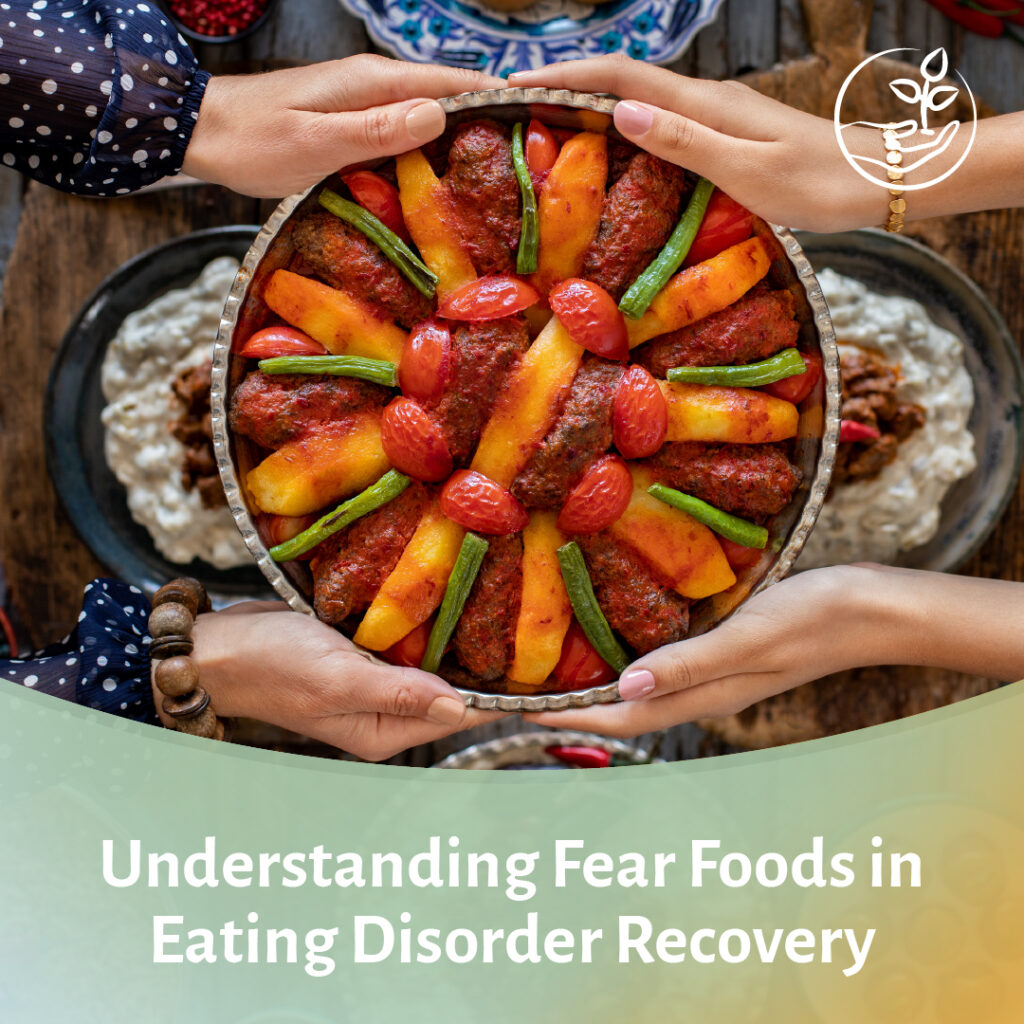
Understanding Fear Foods in Eating Disorder Recovery


Recovering from an eating disorder takes a lot of strength, resilience and re-learning how to love your body and fuel it in the way it needs. At times, this process can seem overwhelming and cue your decidedly unhelpful, previous means of coping, especially when the topic of your “fear food” comes up. If this sounds familiar to your own journey with eating disorder recovery you are not alone. It is estimated that about 9% of the U.S population, or about 30 million people, are diagnosed with an eating disorder. In a society that is obsessed with weight, looks and diet culture, it is easy to get lost in misinformation and fall victim to disordered eating.


Often it is easier to have support and accountability in recovery with the help of professionals. If you think you could benefit from mental health counseling and navigating eating disorder recovery, reach out today to see how we have helped thousands of girls and women and how we can help you.

Fear Foods

Disordered eating can cause people to have distorted or exaggerated perceptions of food, digestion, nutrition and dietary habits. If you’re unfamiliar with the term, the idea of fear foods references specific food items that cause anxiety and guilt upon consumption. These foods may be ones that are often thought of as “unhealthy,” but they aren’t always”. Though it is helpful to be knowledgeable on your food’s nutritional value and content, the ritual of eating is about so much more than counting macros.

Some examples of common fear foods include pasta, chocolate, dairy and foods high in fat. However, all these foods have important nutrients that your body needs and can be a meaningful part of culture and shared meals. Many individuals may cast judgement on their food choices, and in turn feel better about themselves when they only eat what they perceive to be “good” foods, and feel guilt or shame when eating foods they perceive to be “bad.”

When foods become “bad,” forbidden, or feared, they tend to create equally intense feelings of deprivation that can lead to binge eating. In this way, marking some foods as “off limits” is directly contributing to the cyclical nature of the eating disorder.

While there is more to food than the nutrients it contains, understanding how food works to fuel your body can debunk some common food/diet culture misconceptions and give a more holistic perspective of nutrition. Let’s break down the contents of some of the common fear foods listed above.

Chocolate

chocolate

Sweet tooths, rejoice! Although chocolate (and the sugar it contains) is a common fear food for many individuals living with an eating disorder, our bodies rely on sugar for short-term energy. Often, sugar is the quickest and most reliable source of short-term energy requested by cells in the form of cravings. The body is incredible in its ability to ask for what it needs, and building trust in one’s appetites and body knowledge is an important part of eating disorder recovery. Regular chocolate or sugar cravings may be an indicator suggesting irregular eating or insufficient eating. These are important messages from the body to take note of and not to fear or judge.

Choosing to have chocolate and enjoying the experience of the “food of the Gods” that’s melt-in-your-mouth good is not something to fear, but something to enjoy!

Dairy

Dairy is often associated with fats and bloating, which is why it is a common fear food for many people living with an eating disorder. However, due to its high calcium content, dairy foods are recommended to be incorporated into people’s daily diet. Calcium is critical for bone strength and health, and is often recommended to manage nutritional needs of eating disorder patients.


Pasta

Pasta is often a fear food because carbohydrates have become villainized by diets and in the media. Carbohydrates are important to keep us full and fueled with energy. Carbohydrates are our body’s primary and preferred source of fuel–in fact, our brain can ONLY use carbohydrates to function correctly! Our muscles and liver also need carbohydrates to work.

Fueling Your Body

By understanding how your body processes food you can develop a deeper understanding of why it’s important to eat foods that might feel scary. Your body is a system that works 24/7 and it needs energy to do so. This energy comes from food.

Road To Recovery

It is important to remember: healing is not linear. Progress does not happen overnight. It may take time, a few setbacks, and a full helping of support to heal emotionally, mentally and physically from an eating disorder. Food and diet are an inevitable and necessary part of life, so developing a healthy mindset and routine regarding nutrition and food is crucial in recovery. The recovery journey can be overwhelming, but it doesn’t have to be walked alone. Many girls and women have found success in eating disorder recovery with THIRA Health. For more information on what THIRA Health can do to help you, contact us today.


Source: https://www.thirahealth.com/2022/11/10/understanding-fear-foods-in-eating-disorder-recovery/


Thursday, March 2, 2023

Self-Soothing with DBT: Skills to Help You Navigate Low Moments through Mindfulness


Dialectical Behavior Therapy (DBT) focuses on four major components: interpersonal effectiveness, mindfulness, emotional regulation and distress tolerance. Though these concepts may seem foreign to you now, this article will explain how you can utilize DBT mindfulness to self-soothe to manage anxious, depressive, obsessive or intrusive thoughts. These coping skills can be utilized by anyone, anywhere and at any time.

Though DBT mindfulness exercises can be helpful to add to your repertoire of healthy coping skills, you can still work with a clinician or therapist to fine-tune these tactics. A professional can guide you in applying DBT skills to your individual needs and support your development and understanding of dialectical behavior therapy and mindfulness. If you would like to learn more about DBT and how it could help you navigate strong emotions and low moments, reach out today.

What Is Mindfulness?

In the psychological scene, mindfulness is defined as “non-judgmental attention to the present moment.” Mindfulness as a therapeutic technique can be traced back to classic Buddhist practices. Rooted in concepts of meditation, the practice of mindfulness aims to promote intention, reflection, compassion and a non-judgmental approach toward emotions.

So, what does that have to do with coping with sadness, anger, impulse or frustration and emotional regulation? Everything, actually.

Putting DBT skills to use increases our emotional regulation abilities with proven techniques for de-escalation and coping. Mindfulness, in particular, allows us to feel awareness and acceptance of our emotions. In mindfulness, we’re offered the time and space to feel and reflect on our emotions consciously instead of subconsciously. This allows us to understand our emotions better and act on them while pressing pause on our impulses.

Core Facets Of DBT Mindfulness: “What” And “How” Skills

DBT is divided into four skills categories that each address a core facet of a “life worth living,” including emotional regulation, interpersonal effectiveness, distress tolerance and mindfulness. The four DBT skills categories are further broken down into digestible skills that can be easily understood and implemented into daily life.

Mindfulness—the “what” skills, in particular—is rooted in the actionable steps of observing internal and external states, describing the present experience, and participating fully in the present moment. DBT “how” skills complement the “what” skills perfectly, and teach us to engage in each moment non-judgmentally, one-mindfully and effectively (or choosing to do what works). In order to best understand these mindfulness skills and their benefits, we will first break down these core facets of the DBT “what” and “how” skills.

“What” Skills:

Observing your thoughts and simply paying attention to your experience can help you better label the emotion, gauge the strength and duration of the feeling and later, help overcome the grip of strong—sometimes painful—emotions such as anxiety or sadness.

Next, describing your feelings is important to help you recognize what environmental (or internal) events cue certain emotions, how exactly they make you feel, and can assist with identifying the exact emotion you are feeling in regards to the precipitating event. This is best described with the example of “I Statements,” i.e., “I feel disappointed when I…” instead of “I am a disappointment.”

When we participate fully in the moment, we are operating counter-culturally and immersing ourselves fully in the task before us. This skill rejects the idea of multi-tasking and asks us to become absorbed fully into the one thing that we are doing.

“How” Skills:

The first DBT “how” skill requires a nonjudgmental awareness of the present moment. Mastering this ability to perceive without emotionally reacting (no matter if its positive or negative) helps us to interpret and label our feelings accurately to gauge an appropriate, thoughtful response. Often when we act on emotions alone, our reactions are fueled by that immediate impassioned reflex that can lead to overreacting, impulsive behavior and emotionally-charged decision making. Even positive judgments are not always helpful to us, and this component asks us to refrain from engaging the part of us that wants to categorize in terms of “good” and “bad.”

The second “how” skill that suggests we engage in life one-mindfully is reminiscent of the “what” skill of participating fully. Whether we are watching our favorite show on Netflix or eating dinner, these skills ask us to resist the urge to also scroll on our phone or multitask while we move throughout our day.

Finally, choosing to lean into effectiveness and do what works allows us to tailor our approach to life and these skills based on our personal preferences. This skill affirms our individuality and empowers us to make decisions that are best for us. In DBT mindfulness skill building, we’re encouraged to act according to what’s proven to be helpful for us and leave behind the rest.

Practicing mindfulness encompasses the rituals of “what” and “how” skills to create an awareness of emotions and the present moment. Such awareness of our emotions is the first step toward better control and verbalization of them.

DIY DBT: Mindfulness Exercises

Having a better understanding of DBT and its core facets lays an important foundation for effectively and successfully utilizing mindfulness exercises.


Walking Meditation

This practice allows us to turn off our autopilot setting. Instead, we can use the walk to quiet our minds. When walking, instead of thinking of work or your to-do list, focus only on your surroundings: your feet meeting the ground, sounds, smells, the sensation of a breeze. Given that mindfulness is rooted in the present moment, this is a very simple way to change your surroundings and practice observing and describing sensations.


5 Finger Hand Trace

This exercise can be done virtually anywhere. Put your hand in front of you and spread your fingers. With your other hand and starting at your thumb, trace your finger from your palm to the tip while inhaling, and then back from the tip to the base while exhaling. This helps to regulate breathing, focus on movement and build that mind-body connection and awareness.

Body Scan

This video walks you through this meditation. Essentially, it focuses on focusing on isolated parts of your body and sensations starting from your head, down to your toes in 5-minute increments. This allows us to practice intentional emotional regulation and focusing on the present moment.

Breathing Exercises

One common mindfulness breathing exercise is diaphragmatic breathing. While seated in a relaxed and comfortable position, place your hand on your lower stomach. Focus on breathing with your diaphragm by watching the hand placed on your lower abdomen rise fall for about 10 minutes. This aims to focus on deep breaths and increase mind-body connection while redirecting your mind from outside thoughts.


Self-Soothing With DBT Mindfulness

With this knowledge, you can practice these mindfulness techniques to help you navigate moments of low, negative emotions. If you find yourself needing more support and guidance in your relationship with depression, anxiety, suicidal thoughts or an eating disorder, learn more about how the team at Thira Health, DBT and these mindfulness skills can help.


Source: https://www.thirahealth.com/2022/11/17/self-soothing-with-dbt-skills-to-help-you-navigate-low-moments-through-mindfulness/

How Can I Support My Friend with An Eating Disorder?


In your lifetime, it’s likely that you will know and love people who are battling eating disorders. Research estimates that 9% of the U.S. population, or 28.8 million Americans, will have an eating disorder in their lifetime. Thus, many of you have come here searching for answers, wondering, “How can I support my friend with an eating disorder?”, “What are the warning signs to look out for?” and “If you suspect that a friend has an eating disorder, what should you do?”


What Are The First Things You Should Know About Eating Disorders?

Eating disorders – including anorexia nervosa, bulimia nervosa, and binge eating disorder – are complicated and serious conditions that involve severe disturbances in people’s eating behaviors, as well as a preoccupation with food and body image. These behaviors are often fueled by negative thoughts or painful emotions. Restricting food can be used to feel in control and overeating can temporarily soothe sadness, anger, or loneliness.

Over time, people with an eating disorder lose the ability to see themselves objectively and obsessions over food and weight overcome everything else in their lives. The nature of these illnesses makes them one of the deadliest mental illnesses, second only to opioid overdose.

Warning Signs Of An Eating Disorder

It can be challenging to differentiate between an eating disorder, general self-consciousness, weight concerns, and dieting. In addition, those with eating disorders may go to great lengths to hide their behaviors. As time progresses, however, the warning signs can become easier to spot:

Restricting Food

  • Obsessions with counting calories, reading food labels or weighing portions
  • Taking diet pills or other drugs (stimulants, amphetamines) to promote weight loss
  • Avoiding meals or situations involving food
  • Restrictive food rituals, including excessive chewing or refusal to eat certain foods

Bingeing

  • Hoarding and hiding of food, especially “junk food” and sweets
  • The disappearance of large amounts of food in short periods of time
  • Empty food packages and wrappers, potentially also hidden
  • Secrecy and isolation

Purging

  • Leaving right after a meal or frequent bathroom trips
  • Running sink or shower after eating to hide sounds of purging
  • Using excessive amounts of breath mints or mouthwash
  • Taking laxatives or diuretics unnecessarily
  • Discolored teeth

Body Dysmorphia

  • Extreme preoccupation with body or weight (constant weigh-ins, spending time in the mirror inspecting and criticizing their body)
  • Dramatic changes in weight (weight loss, weight gain, or constant fluctuations in weight)
  • Fear of gaining weight
  • Attempts to hide weight under clothes or by avoiding social events

If you notice any of these warning signs, it may be time to speak up. It can be difficult to combat fears that you might be wrong, might say the wrong thing, or potentially upset the other person. While these worries are valid, it is important to remember that this person may need help that they are afraid to ask for. Without treatment, eating disorders only get worse.

How To Talk To Your Friend About Their Eating Disorder


You’ve noticed some warning signs of an eating disorder, and you are preparing for a tough conversation. Consider how you will initiate the conversation and how you can make your friend feel as safe and supported as possible.

Pick A Good Time

Find a time when you can speak to your friend in private and free from distractions or interruptions. Make sure that you are both feeling emotionally calm and regulated.

Share Why You Are Concerned

Without lecturing or criticizing, share what you have noticed and why you are worried. You do not need to immediately offer solutions – just express that you love them and want to help.

Be Prepared For Defensiveness Or Denial

This conversation may initially feel threatening to someone with an eating disorder. Individuals with eating disorders can be especially secretive due to the guilt or shame they feel – so you may be met with defensiveness or denial. Try your best to remain calm, focused, and respectful.

Be Patient And Supportive

Even if the person shuts you down, don’t be discouraged. It may take some time before they are fully willing to accept that they need help. Opening these lines of communication means that when they are ready to talk, they know they will be met without judgment. Make sure they know that you see them, believe in them, and are ready to help when they are ready to accept it. Recovering from an eating disorder takes a great deal of strength, resilience, and re-learning.

Take Care Of Yourself

Supporting other people requires us to first support ourselves. Pay attention to the thoughts and feelings that come up as you help your friend navigate through their eating disorder. Make sure that you maintain a healthy and balanced approach to what you eat and how you view your body. Stay close to people who make you feel safe and comfortable in your own skin. If you notice disordered eating in your own life, do not hesitate to reach out. Not one of us is alone.


At Thira Health, we know that eating disorders do not discriminate and every road to recovery is unique. Let us help you (or your friend) find your path to a happier, healthier life. Visit www.thirahealth.com or call us at 425.448.8808.

Source: https://www.thirahealth.com/2022/12/08/how-can-i-support-my-friend-with-an-eating-disorder/

Wednesday, March 1, 2023

The STOP Skill: A DBT Tool to Use in Difficult Moments


Over recent years, 
Dialectical Behavior Therapy, or DBT, has continued to grow in its popularity as a psychological treatment approach. Dialectical means “the existence of opposites,” referring to two seemingly opposite strategies used in DBT; acceptance (i.e. that experiences are valid, of things one cannot change), and change (i.e., making positive changes to manage emotions and move forward).


In DBT, clients are introduced to a variety of skills related to the four modules of psychological and emotional function that DBT focuses on; mindfulness, interpersonal effectiveness, distress tolerance and emotion regulation. The development and advancement of these skills can help individuals overcome challenges and reach their full potential. While DBT was originally developed to treat individuals with Borderline Personality Disorder, research has shown that it is effective in treating a wide range of other disorders including substance dependence, depression, post-traumatic stress disorder (PTSD), and eating disorders.

What Is Distress Tolerance?

distress tolerance

Distress tolerance refers to our ability to tolerate stress or pain during difficult situations, and not attempt to change it. DBT provides skills to assist in accepting reality when reality is difficult to accept or when strong urges to engage in maladaptive behavior are present (i.e., urges to self-harm).

While not everyone experiences mental illness, we all experience a wide variety of stress throughout our lives. These stressors can range from “annoying” to “life-altering,” such as a break up, job loss, or a traumatic event. No matter your stress-level, your ability to tolerate distress plays a major role in your ability to respond to stressful situations effectively. Learning and practicing distress tolerance skills can make a very positive difference – for anyone!

One popular distress tolerance skill taught in DBT is the STOP skill. When confronted with a stressful situation, we may feel pressure to make decisions and reach a solution as quickly as possible. However, we can make healthier, more informed decisions and find better solutions when we give ourselves the chance to stop and slow our racing minds down. Let’s walk through this skill together.

When You Are In Distress, STOP.

S – STOP

When you begin to feel like your emotions are getting out of control, just stop where you are. Be still and quiet. Take a moment to remind yourself that you are in control of what you say and do. Name the emotions that you are feeling and try not to judge them as good or bad, positive or negative.

T – TAKE A Step Back

When dealing with a difficult situation or feeling overwhelming emotions, it may be hard to think clearly about the next best steps. Give yourself some time to slow down and think. Try taking a few deep breaths so that your mind can begin to calm and your thinking brain can turn on. Continue breathing deeply as long as you need, until you are in control. It is okay to take our time to decide how to respond.

O – OBSERVE

Simply observe what is happening around you. Where are you? Who else is there? Try to do so objectively. Next, observe your internal experience. Notice any automatic negative thoughts (ANTs) that come up and remember they are based on an outdated belief system. In order to make effective decisions, it is important to NOT jump to conclusions and, instead, gather the relevant facts so you can understand what is going on and what options you have.

P – PROCEED Mindfully

After stopping, taking a step back, and observing, you can consider how to proceed. Check in with yourself and ask, “What do I want from this situation?” or “What are my goals?” You can feel more calm and self-assured knowing that you are in control of your emotions and be better prepared to address the situation appropriately.

Practice Slowing Down & Stopping

Like most things, using this skill regularly and effectively is easier said than done. As with any skill, practicing the STOP skill will improve your ability to use it when stress and emotions run high. Try practicing this skill in moments of calm, when nothing is wrong. By practicing this skill when you are regulated, you will be able to use it well the next time you are dysregulated.

Taking an opportunity to stop, take a step back, and observe what is happening in and around you in the present moment can improve your self awareness, relational awareness, and help you be more attuned to your own emotions. Next time you find yourself stuck in a difficult situation or feeling overpowered by big emotions, STOP.

Slow But Sure

These skills work their best when used in combination with treatment. Want to learn more and begin to live life fully? Learn more about our transformative treatment options on our website!

Source: https://www.thirahealth.com/2022/12/07/the-stop-skill-a-dbt-tool-to-use-in-difficult-moments/


THIRA Health - Behavioral and Mental Health Articles

The Role of Medication in Mental Health Treatment: Benefits and Considerations

  In the realm of  mental health treatment , medication plays a pivotal role, offering significant benefits to individuals dealing with vari...